
The term data acquisition system is often used, but it does not always mean the same thing to everyone. Ask someone in solar, commercial real estate, manufacturing, or AI development, and you will likely get four slightly different answers. Each is correct in its own context, but none tells the full story on its own.
At its core, a data acquisition system, often referred to as DAS, is the foundation for collecting, processing, and using data from the physical world. It is the bridge between what is happening in real time and what you can actually see, analyze, and act on.
Understanding what a DAS really entails requires looking beyond a single use case.
The Core Concept: Turning Physical Activity Into Usable Data
A data acquisition system is designed to capture measurements from physical systems and convert them into digital data that can be stored, visualized, and analyzed.
In its simplest form, a DAS includes:
- Sensors that measure real-world variables such as voltage, current, temperature, flow and more…
- Hardware that collects and processes those signals
- Software or interfaces that store, display, and organize the data
- Communication capabilities that allow users to access the data remotely
Together, these components create visibility into systems that would otherwise operate as a black box.
Without data acquisition, there is no reliable way to understand performance, detect issues, or optimize operations.
Why Definitions Vary by Industry
The reason the term “data acquisition system” feels ambiguous is that each industry builds its definition around its primary goal. Here are a few industries that use DAS for different purposes:
Solar and Renewable Energy
In solar applications, a DAS is often focused on production monitoring. It tracks how much energy a system generates, verifies performance against expectations, and supports reporting for incentives or compliance.
Here, a DAS is often associated with:
- Revenue-grade metering
- Performance verification
- Utility and incentive reporting
The emphasis is on proving that energy is being produced and delivered as expected.
Multi-Tenant and Commercial Buildings
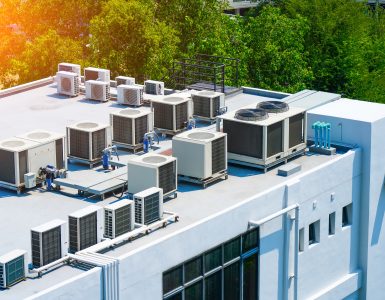
In commercial real estate or multi-tenant environments, a DAS takes on a different role. It becomes a tool for allocation, accountability, and cost recovery.
In this context, a DAS is used for:
- Submetering tenant usage
- Allocating utility costs
- Supporting billing and compliance
The same core technology is used, but the priority shifts from production to fairness, transparency, and financial accuracy.
Industrial and Manufacturing Environments
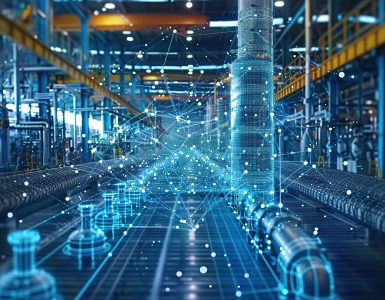
For industrial users, a data acquisition system is about process control and operational efficiency.
It helps:
- Identify inefficiencies in equipment
- Monitor system health
- Reduce downtime through early detection
Here, the DAS becomes a critical part of maintaining productivity and reducing operational risk.
AI and Advanced Analytics
In the world of artificial intelligence, a data acquisition system is not just helpful; it is essential.
AI models depend entirely on data. Without accurate, consistent, and well-structured data inputs, even the most advanced algorithms fail to produce meaningful results.
A DAS in this context is responsible for:
- Feeding real-time and historical data into AI systems
- Ensuring data integrity and continuity
- Providing the scale of data needed for training and prediction
No data acquisition means no AI. It is that simple.
What a Modern Data Acquisition System Really Entails
When you step back and look across industries, a complete data acquisition system is more than just a meter or a logger. It is an ecosystem.
A modern DAS should include:
1. High-Quality Data Capture
Accurate sensors and reliable hardware are the starting point. Poor data at this stage compromises everything downstream.
2. Onboard Processing and Storage
Many systems now include embedded processing, allowing data to be analyzed and stored locally. Some advanced systems can retain data for years, even decades, ensuring continuity during outages or loss of connectivity.
3. Accessible Interfaces
Users need intuitive ways to view and interact with their data. This could be through web-based dashboards, local interfaces, or cloud platforms.
4. Remote Connectivity
A DAS should allow users to access their data anytime, anywhere, without complex software installations.
5. Scalability and Integration
Whether supporting a single building or a global portfolio, a DAS should integrate easily with other systems, including energy management platforms and AI tools.
The Common Thread: Visibility Drives Better Decisions
Despite the differences in how industries define and use data acquisition systems, the underlying purpose remains the same.
A DAS provides visibility.
It transforms raw activity into actionable insight. It allows organizations to move from guessing to knowing, from reacting to planning, and from inefficiency to optimization.
Why It Matters More Than Ever
As energy systems become more complex and data-driven technologies continue to evolve, the role of data acquisition continues to grow.
From managing distributed energy resources to enabling AI-driven optimization, everything starts with reliable data.
A strong data acquisition system does not just collect information. It creates the foundation for smarter operations, better financial outcomes, and more resilient systems.
Final Thought
So what is a data acquisition system exactly?
It is not just a tool, and it is not limited to one industry.
It is the infrastructure that turns the physical world into something measurable, understandable, and actionable.
And in a world increasingly driven by data, it is no longer optional.